Meadowbrook, VA
Water Damage Restoration in Meadowbrook, Dried Down to the Framing
We extract standing water, dry your home down to the studs and subfloor, and handle mold remediation, sewage cleanup and the repairs that follow. Before anything gets closed up, we confirm it is dry with moisture meters. Our crews work day and night in Meadowbrook, Chester, Bon Air and nearby towns.
- 24/7 water damage response
- Free on-site inspections
- Moisture readings logged daily
- Help with insurance paperwork
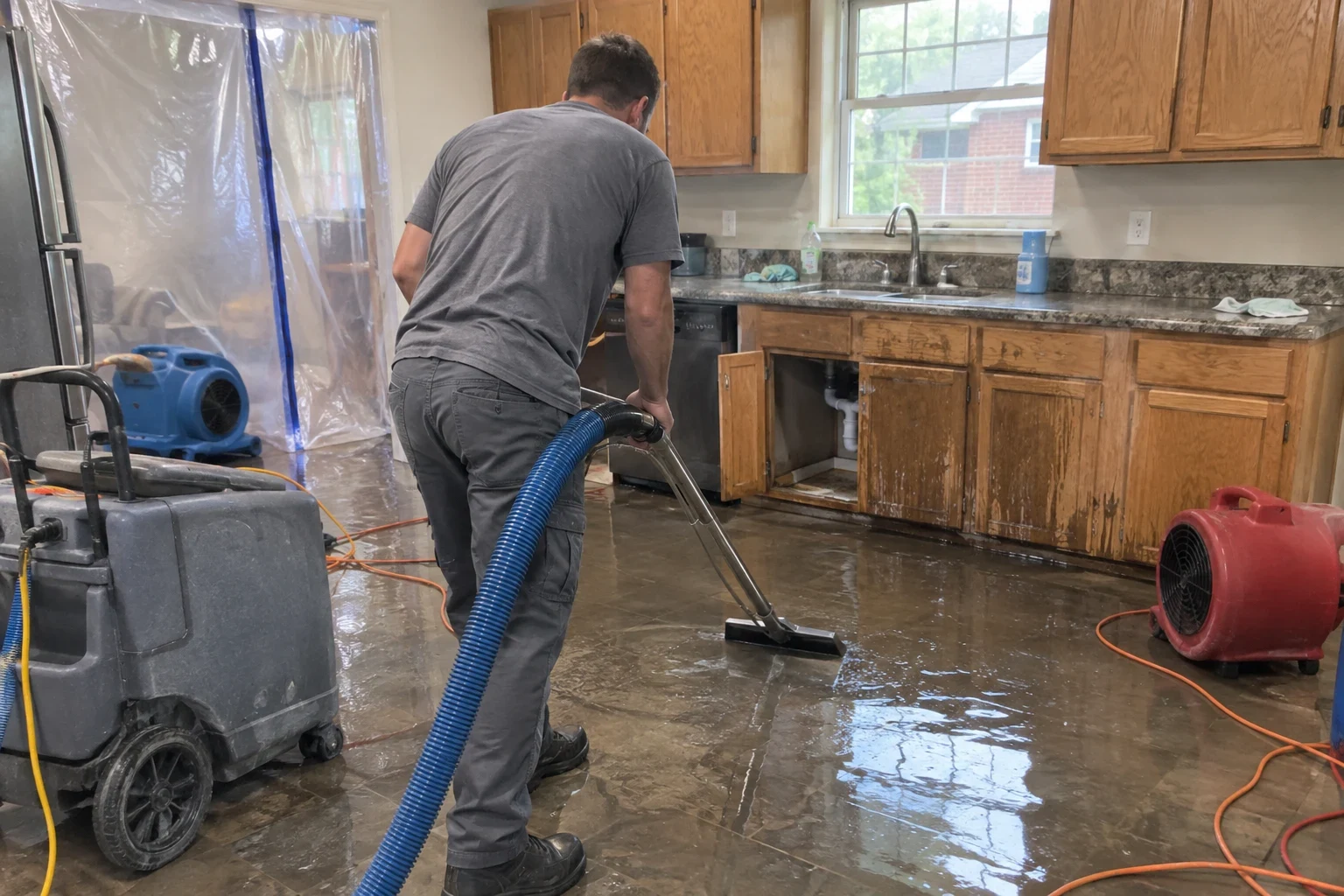
Restoration From the First Gallon to the Final Coat of Paint
Water damage rarely stops where you can see it. It wicks up drywall, soaks the pad under carpet and sits in the bottom plate of the wall. We handle water extraction, drying and dehumidifying, flood cleanup, sewage cleanup, mold remediation, and repairs and rebuild, so one crew follows the job from wet to finished.
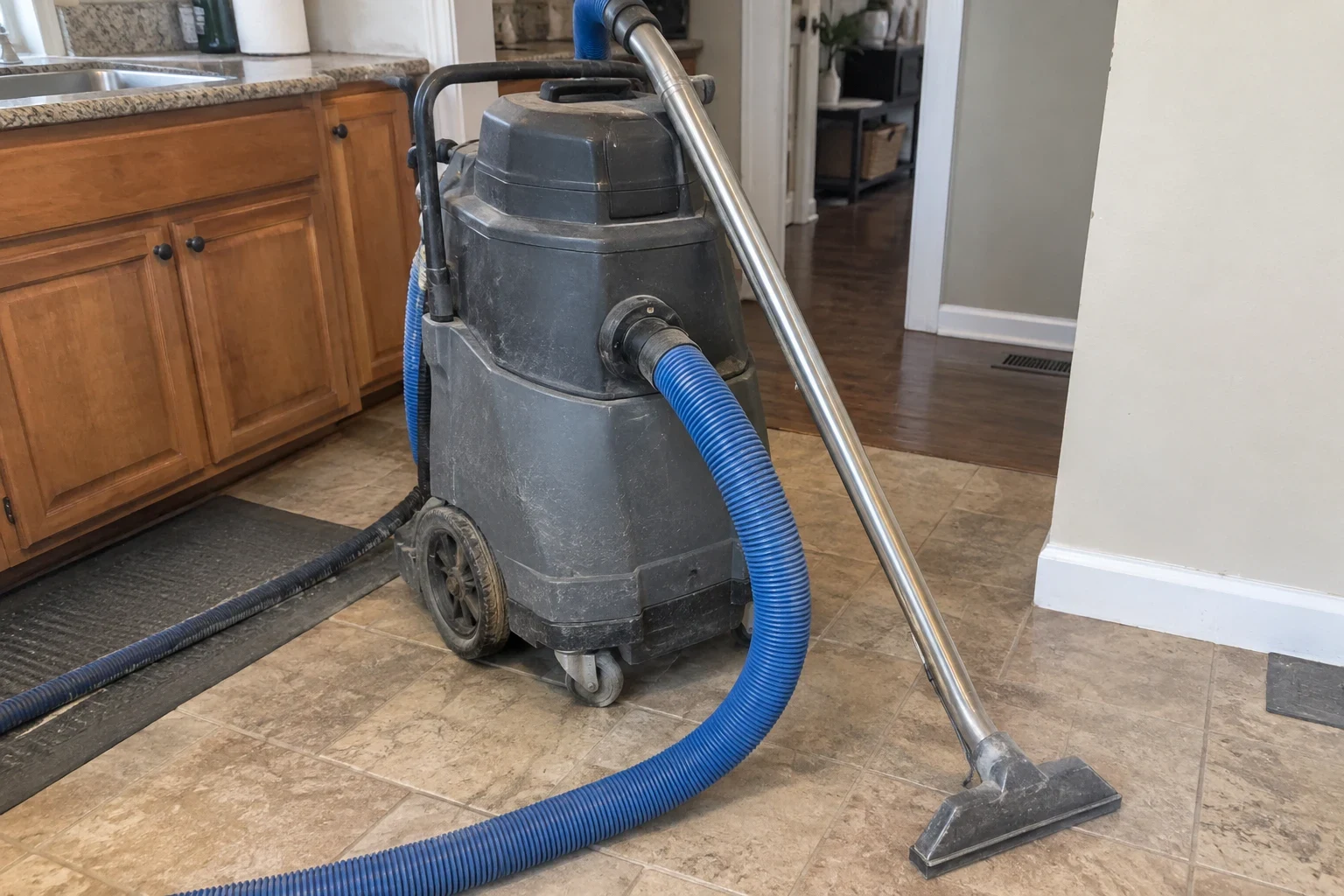
Water Extraction
We remove standing and trapped water from carpet, pad, hardwood and wall cavities, then map moisture with meters so drying starts from accurate readings.
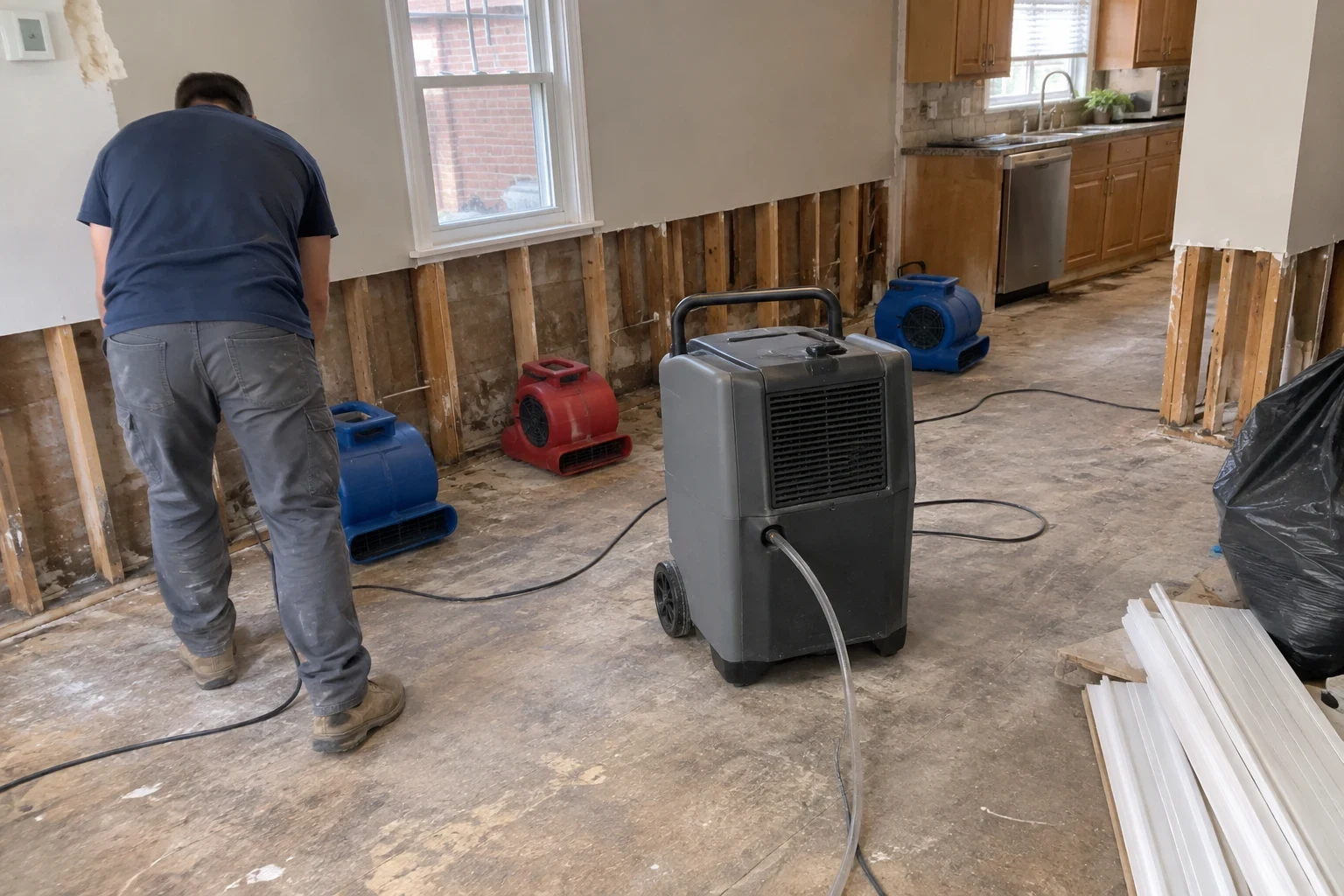
Drying and Dehumidifying
Air movers, dehumidifiers and daily moisture readings that dry walls, floors and framing to a measured standard, not just to the touch.
Mold Remediation
We contain the affected area, remove mold-damaged materials under HEPA filtration and fix the moisture that let the growth start.
Flood Cleanup
We clear floodwater and silt, cut out wet drywall and insulation, sanitize the framing and dry your home to measured targets before any rebuild.
Repairs and Rebuild
We replace the drywall, insulation, subfloor, flooring, trim and cabinets that water ruined, and we close walls only after the framing reads dry.
Sewage Cleanup
Removal of sewage-soaked materials, sanitizing of the framing and slab, and verified drying after a sewer line or toilet backup.
Where We Work
We serve homes throughout Meadowbrook and the surrounding area. That includes Chester, Bensley, Bellwood, Rockwood, Manchester, Brandermill, Bon Air, Richmond, Montrose and Tuckahoe. Our crews carry extraction and drying equipment on the truck, so work can start on the first visit.
- Meadowbrook
- Bensley
- Chester
- Manchester
- Rockwood
- Bellwood
- Richmond
- Bon Air
- Brandermill
- Montrose
- Tuckahoe
If your home is close to these towns and you are not sure we cover it, ask when you call and we will tell you straight.
How a Water Damage Job Runs
Every job follows the same order, so you know what is happening in your home each day and why.
- 1
Stop the source and inspect
We help shut off the water, check that the electrical circuits in wet areas are safe and walk the space with meters and a thermal camera. You get photos and a moisture map of what we found.
- 2
Extract and stabilize
Truck-mounted and portable extractors pull standing water out of carpet, pad and hard floors. We move contents out of harm's way and remove materials that cannot be saved.
- 3
Dry and verify
Air movers and low-grain dehumidifiers go in where the readings call for them. We check and log moisture each visit and adjust equipment until every material hits its dry target.
- 4
Clean and treat
Affected surfaces are cleaned and treated with an antimicrobial. On sewage and mold jobs, this happens inside containment.
- 5
Repair and rebuild
Once the structure reads dry, we replace drywall, insulation, trim and flooring, then finish and paint so the room is ready to use again.
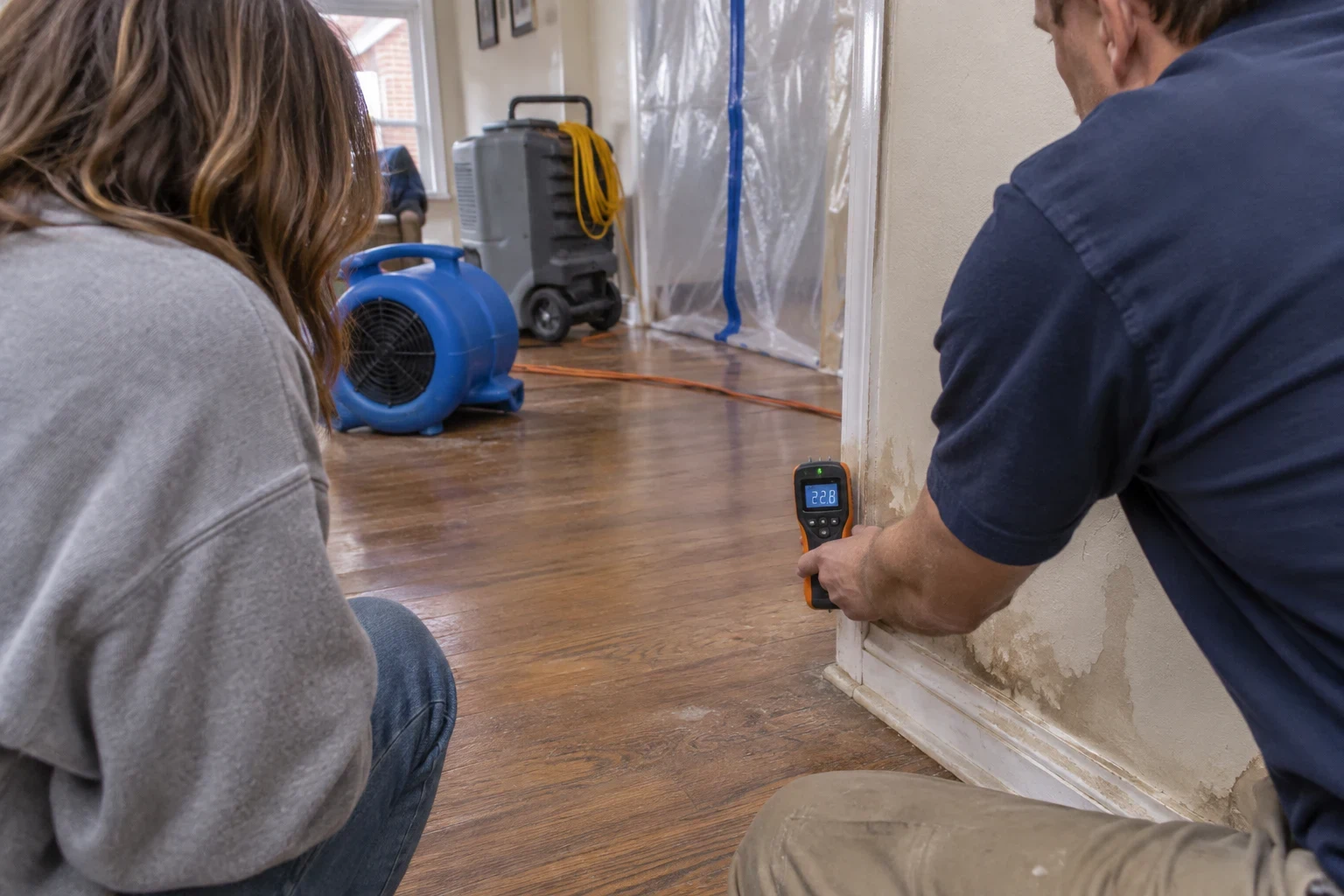
What Moves the Price of a Water Damage Job
No two losses cost the same, because the water, the materials and the access all change the work. These are the factors we look at during the inspection and spell out in the estimate.
Your inspection is free, and you get a written, line-item estimate before work beyond emergency stabilization begins. We work with most major insurance companies and can share our photos and moisture logs with your adjuster.
- Category of water
- Clean water from a supply line is the simplest to dry. Gray water from a washer or dishwasher, and black water from a sewer backup or rising flood, require removal of porous materials, disinfection and protective gear.
- How far it traveled
- Water moves under walls, along joists and up drywall. A single room with a wet carpet is a different job from three rooms with saturated subfloor and wet insulation.
- What it soaked
- Solid hardwood can often be dried in place with floor mats. Laminate and engineered floors over plywood usually cannot, and particleboard cabinet bases tend to swell for good.
- Drying time and equipment
- The number of air movers and dehumidifiers, and how many days they run, follows the readings. Dense materials like plaster and hardwood take longer than drywall.
- Access
- Crawl spaces, finished basements and wet areas behind built-in cabinets take more labor to reach and dry properly.
- Rebuild scope
- Replacing a flood cut of drywall costs far less than new cabinets, flooring or a permitted structural repair.
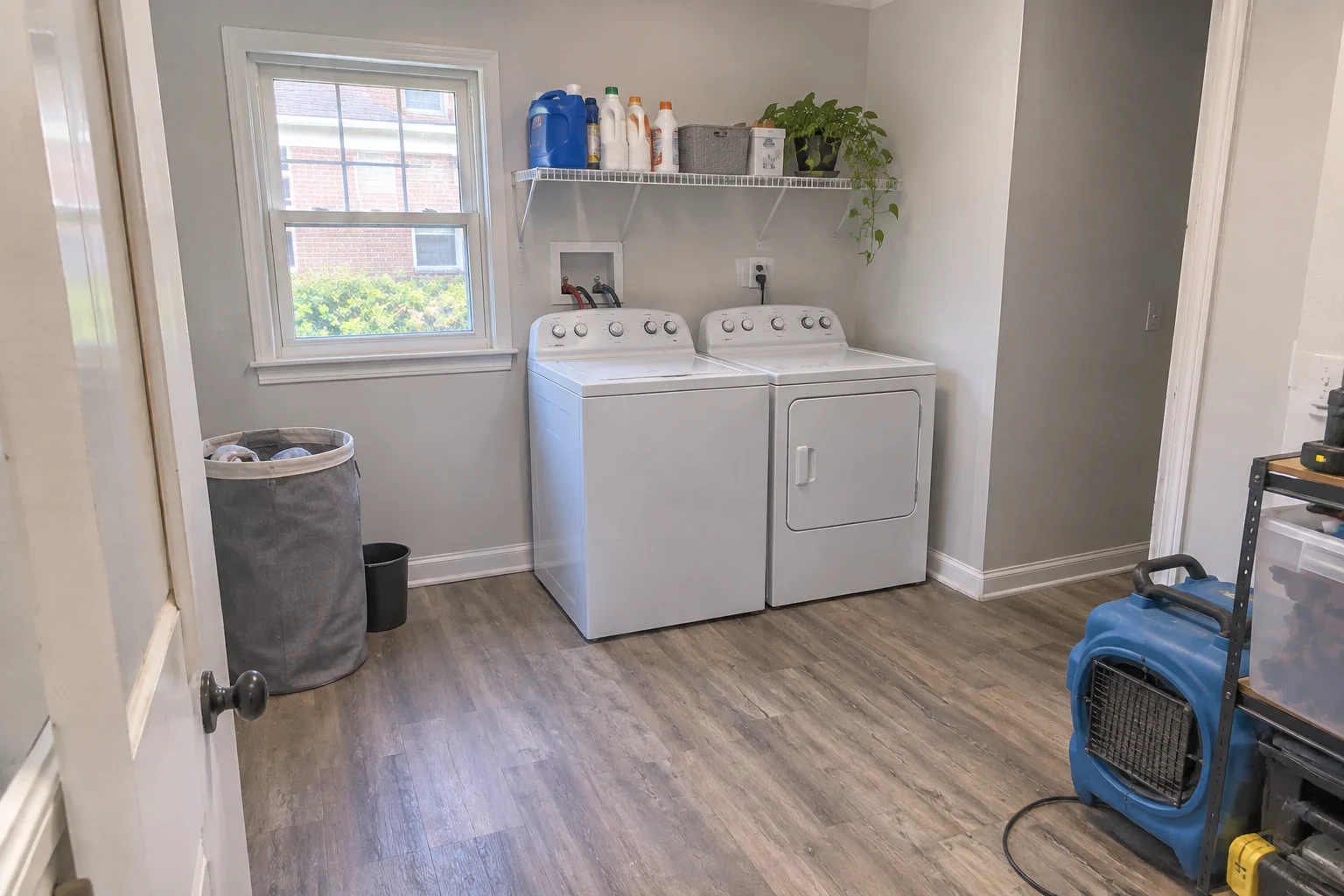
Why the Small Details Decide How Long the Fix Lasts
Most callbacks in this trade come from water that was left behind a wall or under a floor. Our work is built around finding that water and proving it is gone.
- Readings, not guesses
- We map every affected room with pin and pinless moisture meters and a thermal camera, then record the numbers each day. Drywall, framing and subfloor each have their own dry target, and we hold equipment in place until each material reaches its target, not until the surface feels dry.
- We open only what needs opening
- When drywall is wet but sound, we pull the baseboard and drill small holes behind it so air can move through the wall cavity. When insulation is soaked, we make a straight flood cut above the wet line instead of tearing out a whole wall. Less demolition means a smaller, cleaner repair.
- Containment that actually holds
- For mold and sewage jobs we build plastic sheeting barriers, seal the HVAC returns in the work area and run HEPA air scrubbers under negative pressure. That keeps spores and contaminated dust out of the rest of your home.
- Rebuilds that match
- New drywall gets taped, mudded and textured to blend with the old. Trim is back-primed before it goes up, and we set baseboard with a small gap off the floor so it won't wick moisture again.
- On site in 60 mins or less
- Standing water climbs drywall and swells particleboard fast, so we answer the phone around the clock and send a crew with extraction gear on the truck.
Questions Homeowners Ask Us
- How quickly can you get to my home?
- Someone picks up the phone at any hour, day or night, and a crew heads out with extraction gear already loaded. Our offer is on site in 60 mins or less. That first hour counts, because drywall wicks water upward and particleboard begins to swell soon after it gets wet. Until we arrive, close the main shutoff valve if you can reach it safely and stay away from outlets near standing water.
- Will my homeowners insurance cover this?
- It depends on your policy and the cause. Sudden leaks like a burst supply line are often covered, while slow leaks and outside flooding are often treated differently. We work with most major insurance companies and provide photos, moisture logs and a line-item estimate for your claim. Your adjuster makes the coverage decision, and we explain each step so nothing feels unclear.
- How long does drying take?
- Most structural drying takes a few days, but the readings decide, not the calendar. Drywall dries faster than hardwood, plaster or a soaked subfloor. We check moisture on each visit and pull equipment only when every material has reached its dry target.
- Can my carpet and floors be saved?
- Carpet soaked with clean water can often be dried in place, though the pad underneath is usually replaced. Solid hardwood can sometimes be dried with floor mats. Laminate, carpet hit by sewage or floodwater, and swollen particleboard generally have to come out.
- How soon can mold start after a leak?
- Mold can take hold on the paper face of drywall, on wood and on cardboard in roughly 24 to 48 hours, and a hot Virginia summer shortens that window. The surest way to stop it is to get the water out early and keep drying until the meters show the structure is back to normal. If growth has already started, our mold remediation work sets up containment and runs HEPA filtration so spores stay inside the work area.
- Do I have to leave my home during the work?
- Most families stay home during clean water drying, though the fans and dehumidifiers make noise. With sewage cleanup or large mold jobs, we may recommend keeping people and pets out of the affected area until the work is done. We will tell you which applies after the inspection.
- Do you handle the repairs after drying?
- Yes. Our repairs and rebuild work covers drywall, insulation, trim, flooring and paint. Having the same crew do both means the person rebuilding the wall already knows what was behind it and has the readings proving it was dry.
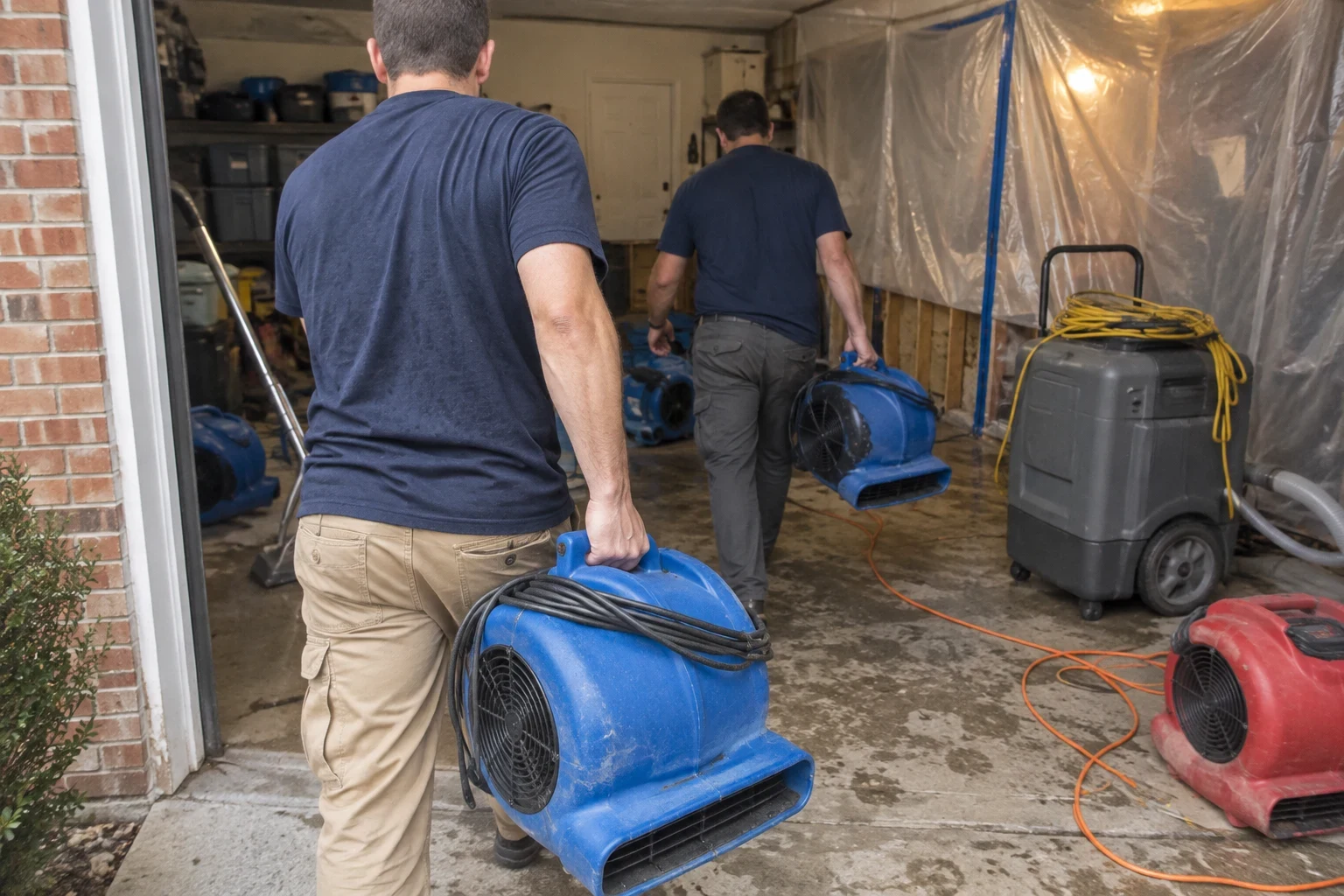
A Restoration Crew That Measures Before It Closes Up
We are a water damage restoration company based in Meadowbrook, Virginia. We started from a simple observation: most mold that shows up months after a leak traces back to a wall cavity or subfloor that was sealed up while it was still wet. So our whole method is built around finding hidden moisture and documenting that it is gone.
That means slower, more careful steps in a few places, like pulling baseboard to vent a wall, lifting a corner of carpet to check the pad, or running one more day of drying when a sill plate still reads high. Virginia's humid summers make that last step matter, because damp framing in a crawl space stays damp on its own. In return, you get a repair that stays dry and a clear record of how we got there.
Water Where It Shouldn't Be
Every hour of standing water lets it climb higher into walls and floors. Call us any time, and a crew will come out, find where the water went and tell you exactly what it will take.