ServicesFlood Cleanup
Flood Cleanup in Meadowbrook
Floodwater from outside carries soil, fuel residue and bacteria into your home. We pump it out, remove what can't be saved, clean the framing and slab, and dry the structure to measured targets so the rebuild starts on sound, sanitary material.
What flood cleanup covers and when you need it
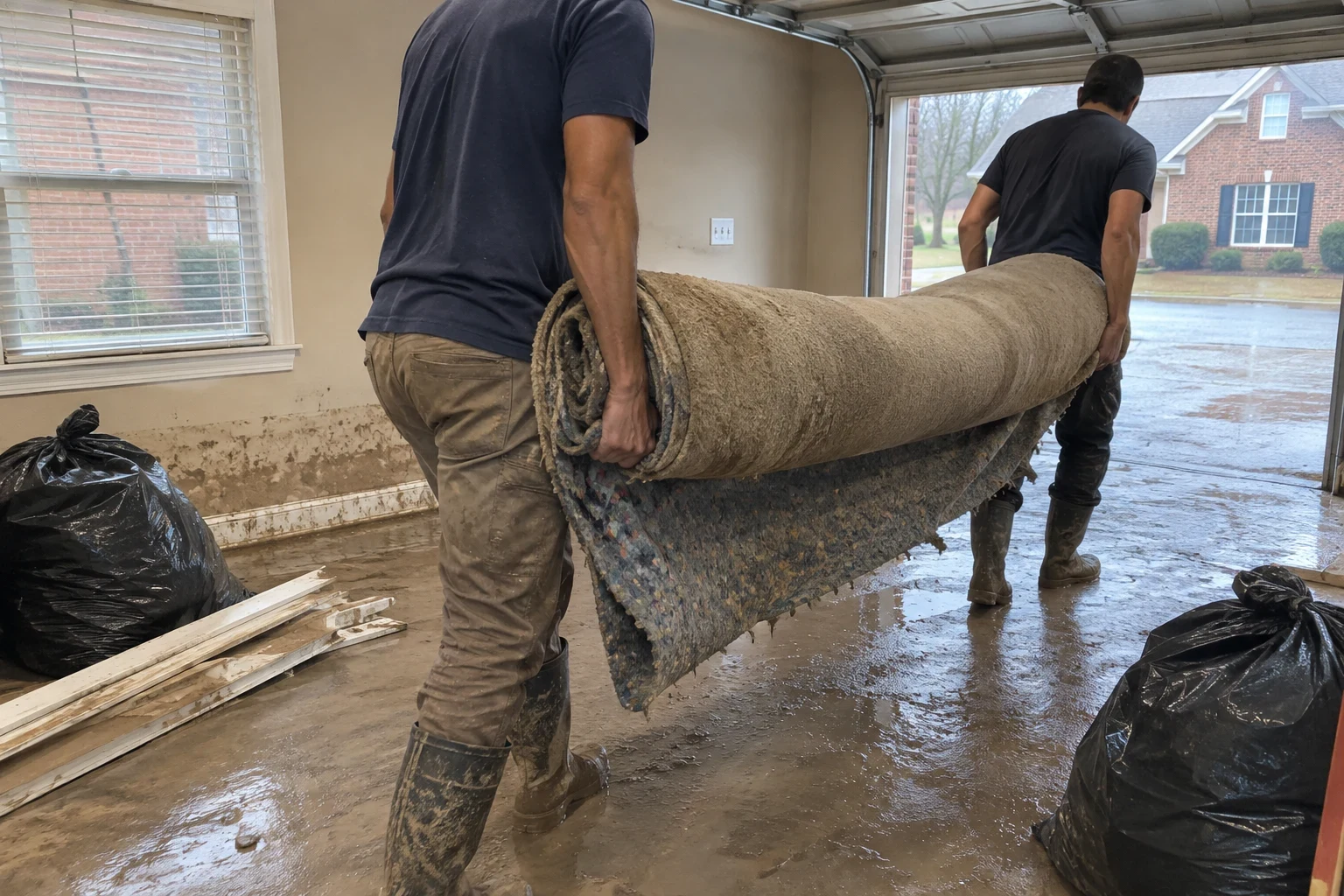
Flood cleanup is the work after water enters from outside: a creek over its banks, runoff through a basement door, groundwater pushing up through a slab joint. That water is treated as contaminated from the first minute, which changes what can stay. Carpet pad, drywall, fiberglass insulation and particleboard that soak it up go to the dumpster. Solid wood framing, concrete and most hardwood subfloor can usually be cleaned and saved.
The details decide whether the job holds up. A flood cut made a few inches too low leaves wicked moisture hidden in the wall. A sill plate that is wiped but never sanitized can grow mold behind brand-new drywall. We cut above the measured wet line, clean every exposed surface and check readings in the framing itself, not just on the wall face.
Heavy summer thunderstorms and tropical storm remnants push a lot of water into basements and crawlspaces around Meadowbrook. When it happens to you, the sooner the water and wet materials are out, the less of your home needs to be replaced.
What our flood cleanup includes
Water and silt removal
We pump standing water, then use truck-mounted or portable extraction to pull water from flooring. Mud and silt are shoveled and squeegeed out before cleaning starts, because sanitizer can't work through a layer of dirt.
Flood cuts above the wet line
We mark the highest moisture reading on each wall, then cut drywall and pull insulation at least a foot above it. Baseboards and door casing come off first and are labeled if they can be reused.
Removal of unsalvageable materials
Carpet, pad, laminate, vinyl plank with wet underlayment and swollen cabinet boxes are removed and hauled away. We photograph and list each item so you have a record for your claim.
Cleaning and sanitizing the structure
Studs, sill plates, subfloor and slab are scrubbed with detergent, rinsed and treated with an antimicrobial. We pay close attention to the bottom plate and the gap where drywall met the floor, where silt collects.
Drying to measured targets
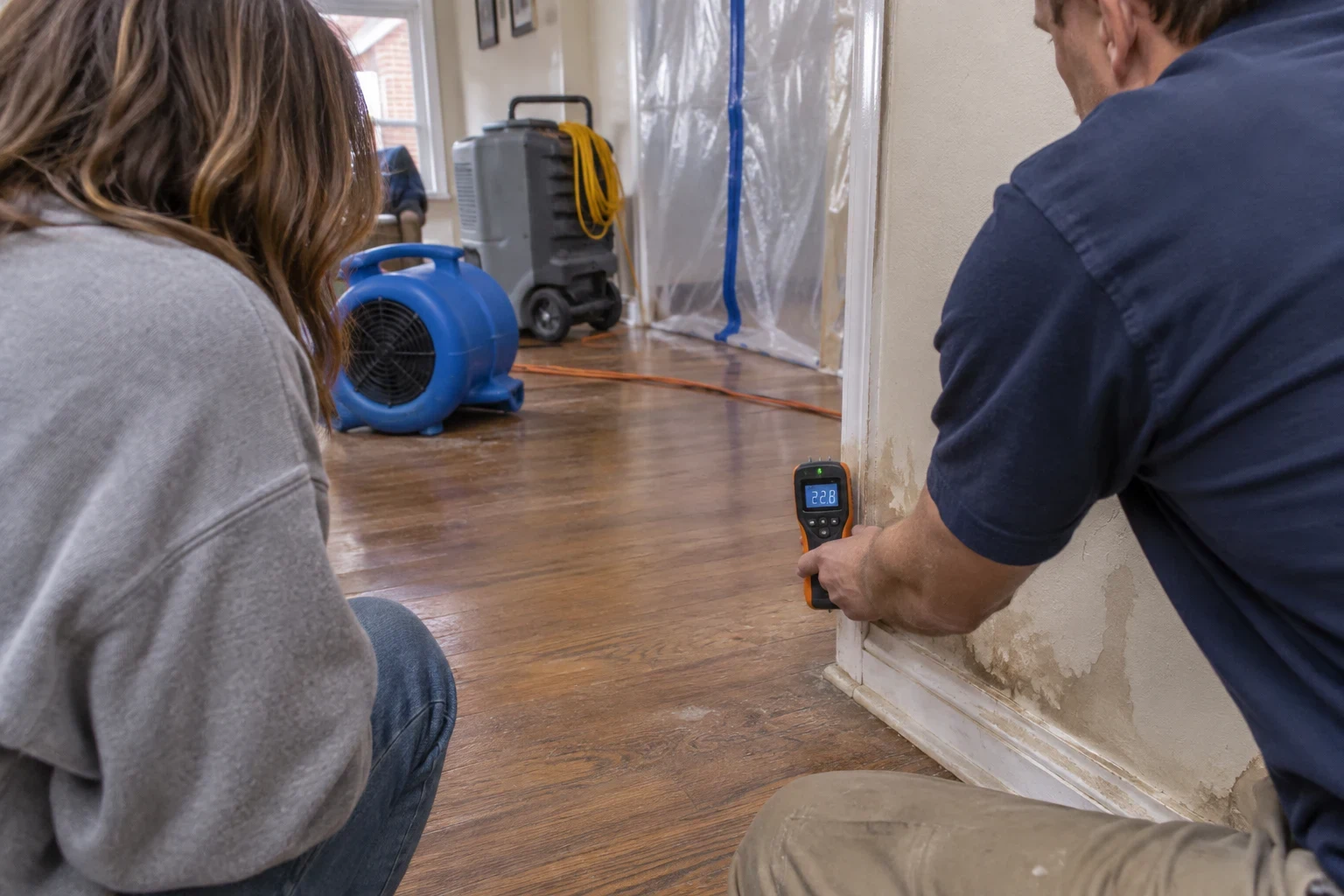
Air movers and dehumidifiers run until wood framing reads back near dry standard, checked with a pin meter at the same marked spots each visit. Our drying and dehumidifying page explains that stage in more detail.
Signs your home needs flood cleanup
- Water came in from outside
- Surface runoff, a rising creek or water through a window well counts as floodwater even if it looks clear. It has picked up soil and whatever was on the ground.
- A dirt or debris line on the walls
- A brown tide line on drywall or paneling shows how high the water reached. The material above it is often wet too, from wicking.
- Soft drywall or bulging baseboards
- Drywall that crumbles at the bottom or baseboard pulling away from the wall means the gypsum core is saturated. It will not dry back to full strength.
- A musty smell within a day or two
- That odor is microbial growth starting in carpet pad or wall cavities. It tells you moisture is trapped somewhere the eye can't see.
- Water around the furnace or water heater
- If floodwater reached gas appliances, electrical panels or ductwork, keep those off until they are checked. We will point out which items need a qualified electrician or HVAC technician to look at them before anything is restarted.
How a flood cleanup job runs
- 1
Free on-site inspection
We walk the affected areas with moisture meters and a thermal camera, map how far the water traveled and note safety issues like electrical outlets below the waterline. You get a plain explanation of what can be saved and what can't.
- 2
Extraction and tear-out
Standing water and silt come out first. Then we make flood cuts, remove wet materials and bag debris, protecting unaffected rooms with plastic sheeting and floor runners along our path.
- 3
Clean, sanitize, document
Every exposed surface is cleaned and treated. We take photos and moisture readings throughout, which most insurance adjusters ask for.
- 4
Monitored drying
Drying equipment is placed and adjusted on daily visits. We don't pull it until readings in the framing and subfloor confirm the structure is dry.
- 5
Hand-off to rebuild
Once dry, the space is ready for new insulation, drywall and flooring. Our repairs and rebuild crew can take it from there, or you can use your own contractor with our readings in hand.
What moves the cost of flood cleanup
Flood cleanup is priced on what we find, so we give you a line-item estimate after the inspection rather than a guess over the phone. The biggest drivers are how far the water spread and how long it sat. We work with most major insurance companies and can explain how your policy treats flood versus other water damage, though the coverage decision is your insurer's.
- Affected square footage and wet line height
- More rooms and higher water mean more drywall, insulation and flooring to remove, and more equipment to dry the framing.
- Materials involved
- Finished basements with carpet, built-ins and paneling take more tear-out than an unfinished concrete space.
- Silt and contamination level
- Thick mud or water mixed with sewage takes more labor, protective gear and cleaning. Sewage-affected areas are handled as sewage cleanup.
- Time before cleanup starts
- Materials that sat wet for several days often need more removal and may require mold remediation as well.
Flood cleanup questions
- Can my carpet be saved after a flood?
- Usually not. Floodwater from outside is considered contaminated, and carpet pad absorbs it like a sponge. We remove carpet and pad that contacted floodwater, though area rugs can sometimes go out for professional cleaning.
- How high do you cut the drywall?
- We cut based on moisture readings, not just the visible water line. Drywall wicks water upward, so we cut at least a foot above the highest wet reading. That leaves room to clean and dry the cavity properly and makes the patch line easy to finish later.
- Does homeowners insurance cover flood damage?
- Standard homeowners policies typically exclude surface flooding, while a separate flood policy may cover it. Water from a burst pipe is often handled differently. We document everything with photos and readings and can walk you through what adjusters usually ask for, but your insurer decides coverage.
- How fast can you get here?
- We offer emergency water damage response and are on site in 60 mins or less. We cover Meadowbrook and nearby areas including Chester, Bon Air and Brandermill.
- How long does the whole cleanup take?
- Extraction and tear-out usually happen in the first visit. Drying commonly takes several days, depending on materials and how long things were wet. We give you a timeline after the inspection and update it as the readings come down.
Get the water out and the structure clean
The sooner wet materials come out, the more of your home stays intact. We'll inspect, measure and explain exactly what needs to go and why.