ServicesDrying and Dehumidifying
Drying and Dehumidifying in Meadowbrook
Water that soaks into drywall, subfloor and framing stays long after the floor looks dry. We set the right equipment and check every wet area with moisture meters each day. Your home is called dry only when the numbers match the dry materials around it.
Why surface-dry is not the same as dry
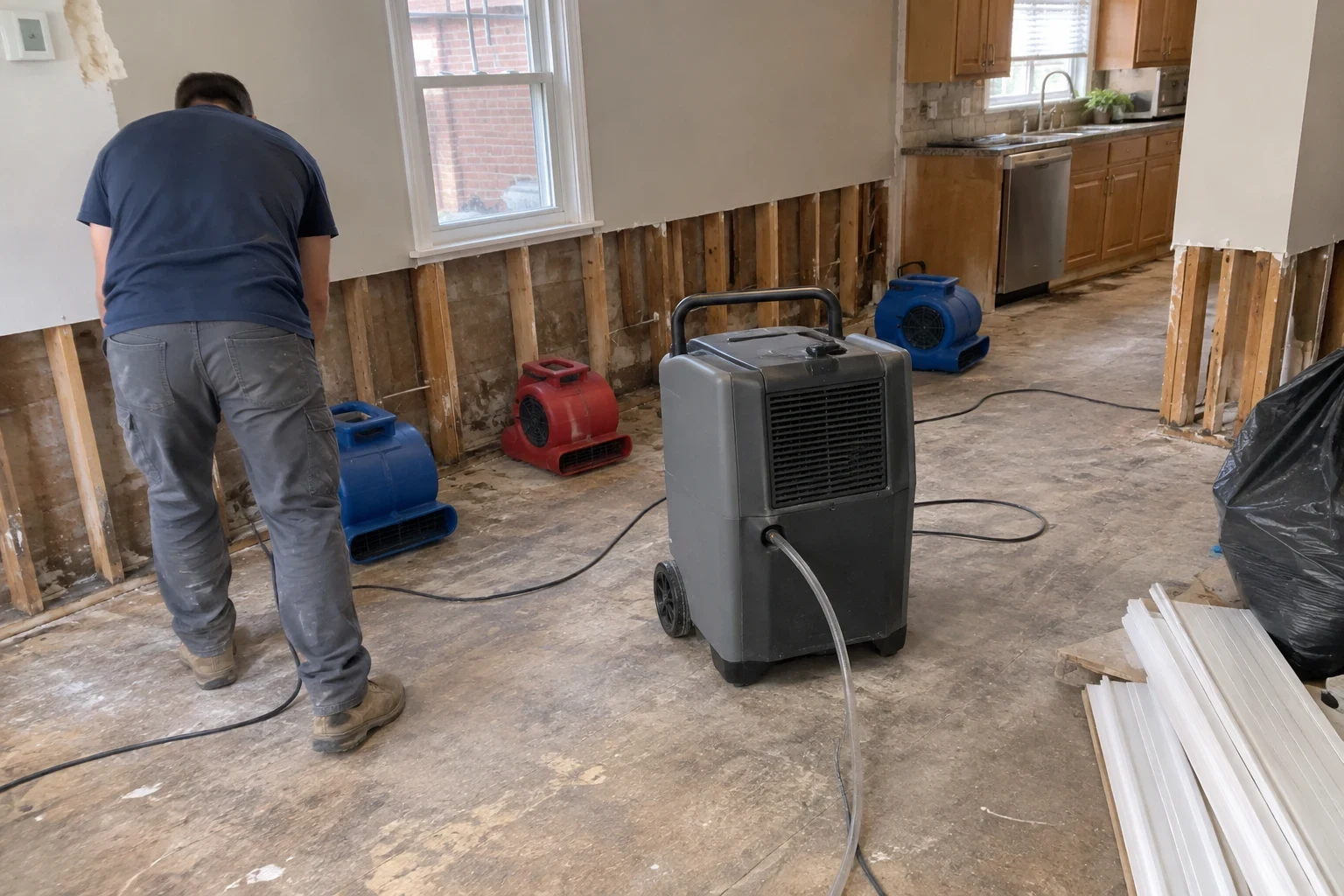
Once standing water is gone, the harder part begins. Gypsum board wicks water upward through capillary action, often 12 inches or more above the visible line. Oriented strand board subfloor swells and holds moisture at its edges. Wall cavities with fiberglass batts trap damp air against the studs. A fan in the doorway dries the room's air and leaves all of that behind.
Structural drying works on the materials themselves. We move air across wet surfaces to pull moisture out, then dehumidify the room so that moisture leaves instead of settling back into the next cold surface. In humid Virginia summers this step decides whether a ceiling stays sound or a baseboard starts growing spots three weeks later.
If water is still standing, our water extraction service comes first. Drying is the step that follows it.
What our drying work includes
- Moisture mapping
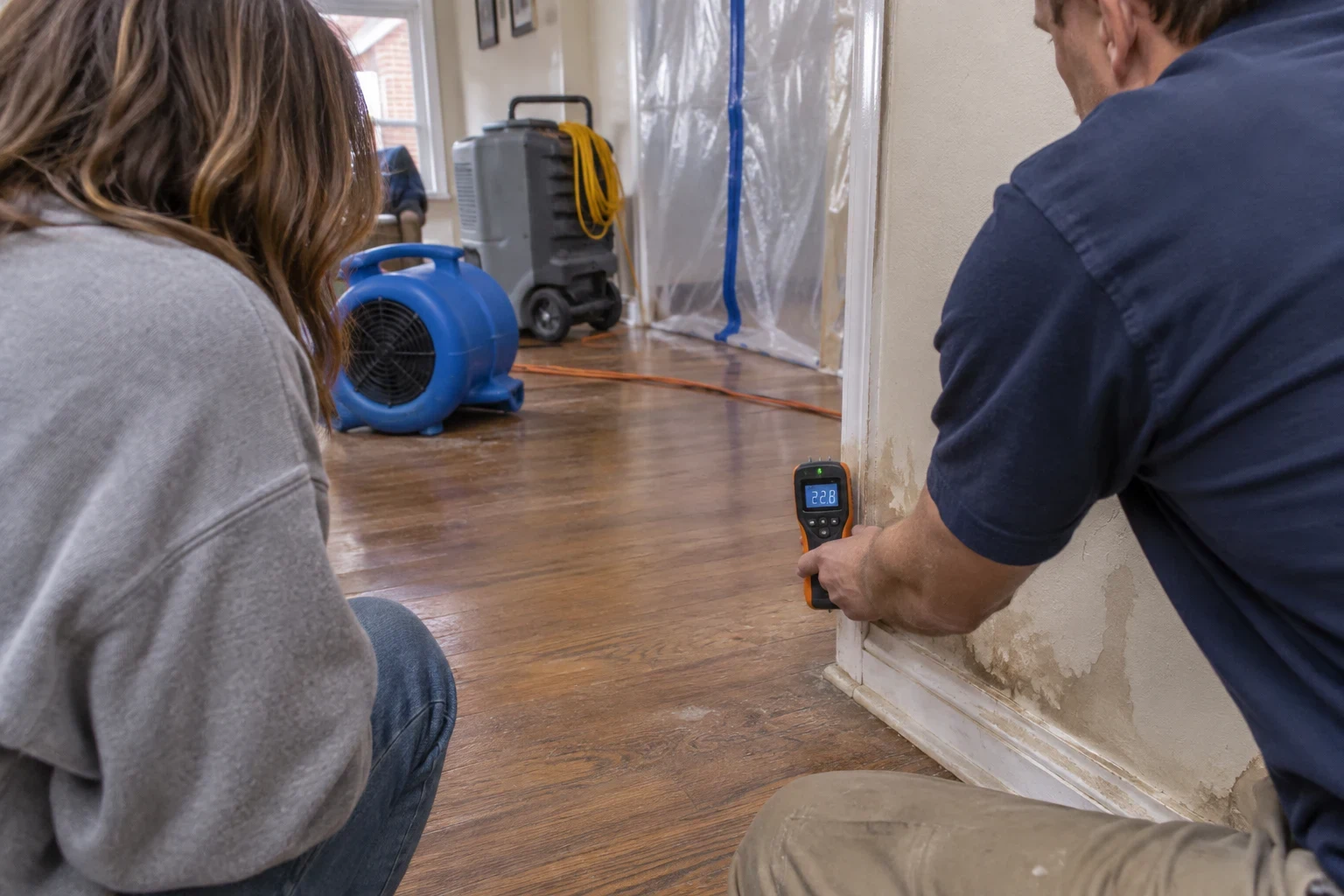
- We read walls, floors and ceilings with pin and pinless meters and a thermal camera, then mark where the wet area ends. We also read a dry wall in the same home, which gives us the target number for every wet one.
- Low-grain refrigerant dehumidifiers
- Low-grain units keep pulling water from the air even after humidity drops, which is where ordinary units stall. We size them to the room volume and the amount of wet material, not by guesswork.
- Air movers set to the surface
- Air movers go at a low angle along wet walls, roughly every 10 to 16 feet, so air sweeps the full face of the drywall. Placement matters more than count.
- Cavity and floor drying
- Where water got inside a wall, we pull the baseboard and drill small vent holes at the bottom plate so dry air can reach the cavity. Hardwood floors can get drying mats that draw moisture up through the boards before they cup.
- Daily drying log
- Each visit we record temperature, relative humidity and grains per pound, plus meter readings at the same marked points. You get a written record your insurance adjuster can follow.
Signs your home needs professional drying
Baseboards that feel soft
Swollen or soft MDF baseboard usually means the drywall behind it took on water. That wall needs reading, not just wiping.
Hardwood starting to cup
When board edges rise above the centers, the bottoms are wetter than the tops. Caught early, many floors flatten back as they dry.
A musty smell after a few days
An odor that builds after the spill is cleaned up points to moisture trapped in a cavity, pad or crawl space. If growth is already visible, our mold remediation team takes over that part.
Paint bubbling or tape lifting
Blistered paint and loose drywall tape seams show water moving through the board from the inside.
Damp air that will not clear
Foggy windows, sticky floors or a room that feels clammy after the leak is fixed mean the air still holds water the materials keep giving off.
What affects the cost of drying
Most of a drying bill comes from how much equipment runs and for how many days, so anything that shortens the drying time also lowers the cost. During your free on-site inspection we lay out the equipment plan and the reasons behind it before anything is switched on. We work with most major insurance companies, and our daily drying log gives your adjuster the readings that justify each day the equipment ran.
Size of the wet area
Every added room or stretch of wet flooring calls for more air movers and more dehumidifier capacity to keep the air dry enough to work.
Materials involved
Drywall and carpet give up water fairly quickly. Hardwood, plaster, concrete slab and layered subfloors hold it deeper and need more days on equipment.
Water inside cavities
Walls and ceilings with water inside them need vent holes or specialty cavity drying, which adds labor and time.
How fast drying starts
Material that sits wet for days soaks up more water and may have to be removed rather than dried. Getting equipment running early is usually the biggest saving available.
How a drying job runs
- 1
Inspect and measure
We find the source, confirm it is stopped and map the wet area with meters. You see the readings and what we plan to set before anything is plugged in.
- 2
Open what has to be opened
We remove only what blocks drying or cannot be saved, such as saturated carpet pad or a swollen baseboard. Cuts are kept clean and straight so the later repair is smaller.
- 3
Set and balance equipment
Dehumidifiers and air movers go in, with doors and vents set to keep the drying area contained. We check that circuits can carry the load.
- 4
Monitor every day
We return daily to log readings and move equipment toward the areas drying slowest. Most rooms reach dry standard in about three to five days, though dense materials like plaster or hardwood can take longer.
- 5
Confirm dry and hand off
When every marked point matches the dry reference, we pull the equipment and give you the final log. Any rebuilding is handled through our repairs and rebuild service.
Drying and dehumidifying questions
Can I just run fans and my own dehumidifier?
For a small spill on a hard floor, often yes. Once water reaches drywall, pad or subfloor, household units cannot pull moisture fast enough and give you no way to know when the material is actually dry. That gap is where hidden mold and warped floors come from.
How loud is the equipment, and can we stay home?
Air movers and dehumidifiers run around the clock and make a steady hum, similar to a box fan on high. Most families stay home. We close off the drying area and keep walkways clear of cords.
Why do you need to cut or drill my walls?
Water behind drywall has no way out except through the board, which can take weeks. Small holes behind the baseboard let dry air into the cavity, and the baseboard covers them afterward. We cut only where the readings show water.
How do you know when it is truly dry?
We compare readings in the wet areas against the same material in an unaffected part of your home. When they match, the job is done. We do not go by feel or by a set number of days.
How quickly can you get here?
We offer emergency water damage response and are on site in 60 mins or less. The sooner equipment is running, the more material can be dried in place instead of torn out.
Get the moisture measured before it settles in
We will read your walls and floors, show you where the water went and lay out a drying plan. The inspection is free.