ServicesMold Remediation
Mold Remediation in Meadowbrook
Mold grows where moisture stays. We find the source, seal off the affected rooms and remove contaminated materials under negative air pressure. Then we confirm the area is dry before anything gets closed back up, so the growth has nothing to come back to.
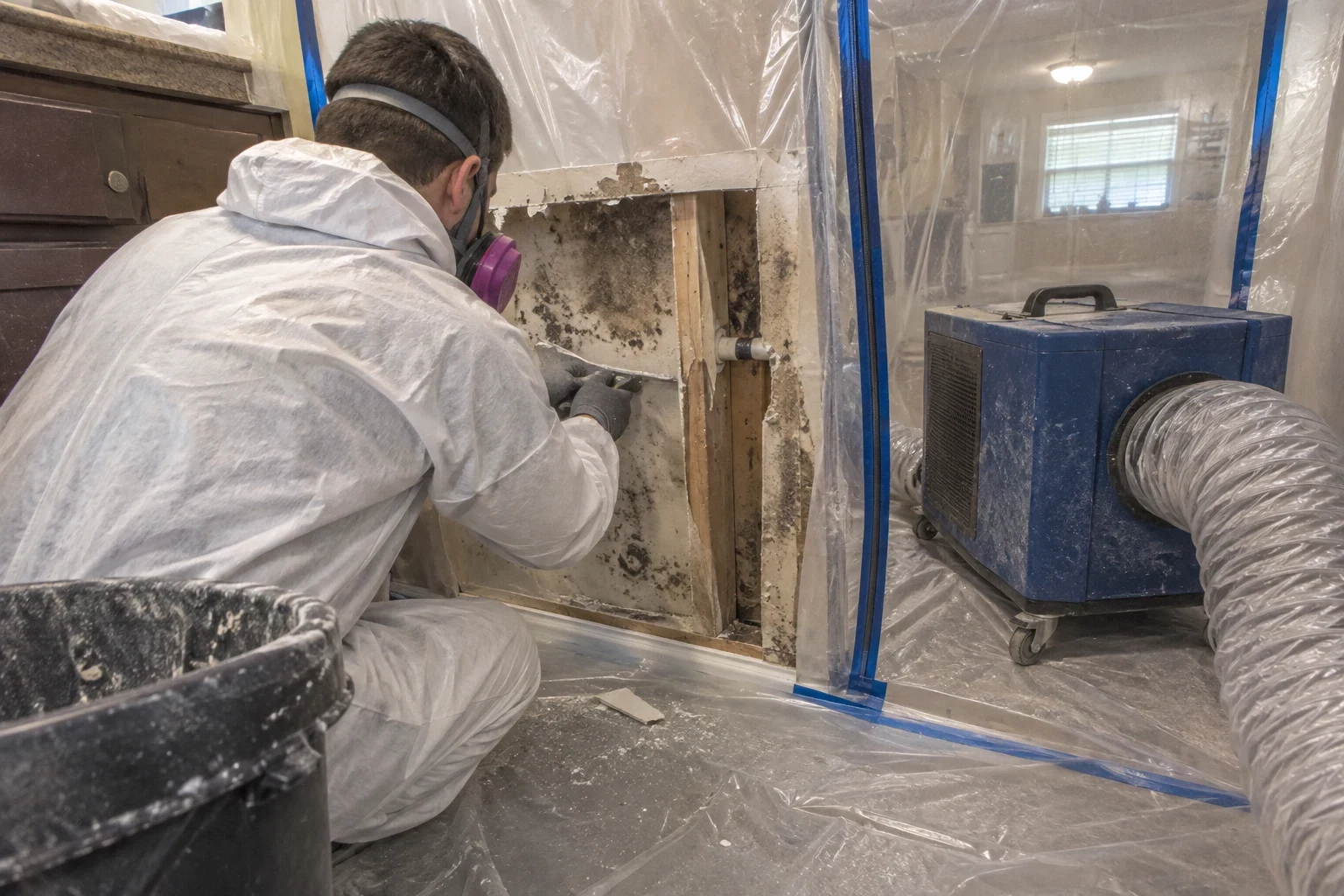
What mold remediation actually means
Mold remediation is the controlled removal of mold growth and the materials it has rooted into, done so spores are not spread to the rest of your home. Spraying bleach on a stained wall does not do this. Bleach is mostly water, it cannot reach roots inside porous drywall paper, and the stain often returns within weeks.
The details decide whether the job lasts. We extend the cut line past the visible growth, seal the work zone with plastic sheeting and zippered doors, and keep it under negative pressure so air flows into the zone and not out of it. Framing gets cleaned down to sound wood, not just wiped.
None of that holds if the moisture source stays. A slow supply line drip, a sweating duct or a damp crawl space will grow mold again on brand-new drywall. Finding and stopping that source is the first line of every plan we write.
What the work includes
Moisture mapping
We use pin and pinless moisture meters and a thermal camera to trace how far water has traveled behind walls, under flooring and into subfloor. The readings set the boundaries of the work, so we remove what is affected and leave sound material alone.
Containment and negative air
The work area is sealed with 6-mil polyethylene sheeting and taped seams. A HEPA air scrubber exhausts filtered air out of the zone, keeping spores from drifting into hallways and HVAC returns.
Removal of porous materials
Drywall, insulation and carpet pad with growth are cut out, bagged inside the containment and carried out sealed. We cut past the visible edge because growth on the back side of drywall usually extends farther than the front shows.
Cleaning structural wood
Studs, joists and subfloor sheathing are HEPA-vacuumed, then wire-brushed or sanded where growth has stained the surface. An antimicrobial is applied after cleaning, never in place of it.
Drying to target
Dehumidifiers and air movers run until the framing reads at normal dry levels for the material. This step overlaps with our drying and dehumidifying service, and it has to finish before any wall is closed.
Final check and handoff
We HEPA-vacuum and wipe all surfaces inside the zone before the plastic comes down. You get photos and moisture readings, and our repairs and rebuild crew can put back the drywall, trim and flooring.
Signs you need mold remediation
A musty smell that won't clear
An earthy odor that returns after airing out a room usually means active growth somewhere you cannot see, often inside a wall cavity or under a floor.
Spotting near plumbing or windows
Gray, green or black flecks around a sink base, toilet or window sill point to a slow leak or condensation feeding growth on the surface.
Bubbling paint or soft drywall
Paint that blisters or drywall that gives under your thumb has stayed wet long enough to lose strength, and mold is often behind it.
Damp crawl space or basement
Humid summers here push crawl space moisture high. Fuzzy growth on joists or wet insulation hanging from the subfloor means the space needs more than a fan.
Water damage left more than two days
Mold can start growing on wet drywall and wood within 24 to 48 hours. If a leak was not dried properly, it is worth checking the area now.
How a mold job runs
- 1
Free on-site inspection
We walk the affected area, take moisture readings and look for the source. You get a plain answer on what is growing where, what needs removal and what can be cleaned.
- 2
Written scope with photos
We put the cut lines, containment size and drying plan in writing with photos of what we found. If insurance may apply, we explain what the adjuster will want to see. We work with most major insurance companies.
- 3
Contain, remove, clean
The zone is sealed and put under negative air before any material is disturbed. Removal and HEPA cleaning follow, and the rest of your home stays in normal use.
- 4
Dry, verify, release
Equipment runs until readings hit dry targets. We do a final cleaning, take closing photos and remove the containment only after the zone checks out.
What moves the cost
Mold work is priced by what has to be contained, removed and dried, not by a flat fee. We give you a written line-item scope after the inspection, so you can see each part before work starts.
- Size of the affected area
- A patch behind a vanity needs a small containment and a few square feet of drywall. A whole basement wall or crawl space needs more sheeting, more air scrubbers and more labor.
- Hidden spread
- Growth inside wall cavities, under flooring or across subfloor often goes past what is visible. Moisture mapping shows this before we cut, so the scope reflects it from the start.
- Access
- Tight crawl spaces, finished ceilings and built-in cabinets take longer to open and protect. Cabinets sometimes have to be pulled to reach the wall behind them.
- Materials to replace
- Insulation, carpet pad and drywall add disposal and replacement cost. Hardwood and subfloor that can be cleaned and dried in place cost less than those that must come out.
Mold remediation questions
Something not covered here? (804) 492-7654
Can I just clean the mold myself with bleach?
On a hard, nonporous surface like tile, small spots can be cleaned. On drywall, wood or insulation, bleach does not reach the growth inside the material and adds water to it. If the area is larger than a few square feet or keeps coming back, it needs removal and a fix for the moisture source.
Will you test the mold to tell me what type it is?
In most cases testing does not change the plan. Visible growth gets removed the same way regardless of species, and the moisture causing it gets fixed. We will tell you honestly if a situation calls for testing.
Do we need to leave the house during the work?
Usually not. The containment and negative air keep the work zone separate from the rest of your home. We will tell you if someone with asthma or a weak immune system should stay elsewhere during removal.
Will mold come back after remediation?
Not if the moisture source is fixed and the area is dried to target before it is closed up. Mold returns when a leak keeps running or humidity stays high, which is why we trace the source first.
Does homeowners insurance cover mold?
It depends on the cause and your policy. Mold from a sudden covered event, like a burst pipe, is often treated differently from mold caused by long-term leaks or humidity. We document the damage with photos and readings and explain the process, but your adjuster makes the coverage decision.
Get the moisture source found first
We will check where the water is coming from, how far the growth reaches and what it will take to remove it properly. If an active leak is still running, we also handle emergency water damage response.