ServicesWater Extraction
Water Extraction in Meadowbrook
When water is on the floor, every hour it sits it wicks deeper into pad, subfloor and drywall. We remove standing and trapped water with truck-mounted and weighted extraction tools, then meter every room so nothing wet gets left behind.
What Water Extraction Actually Removes
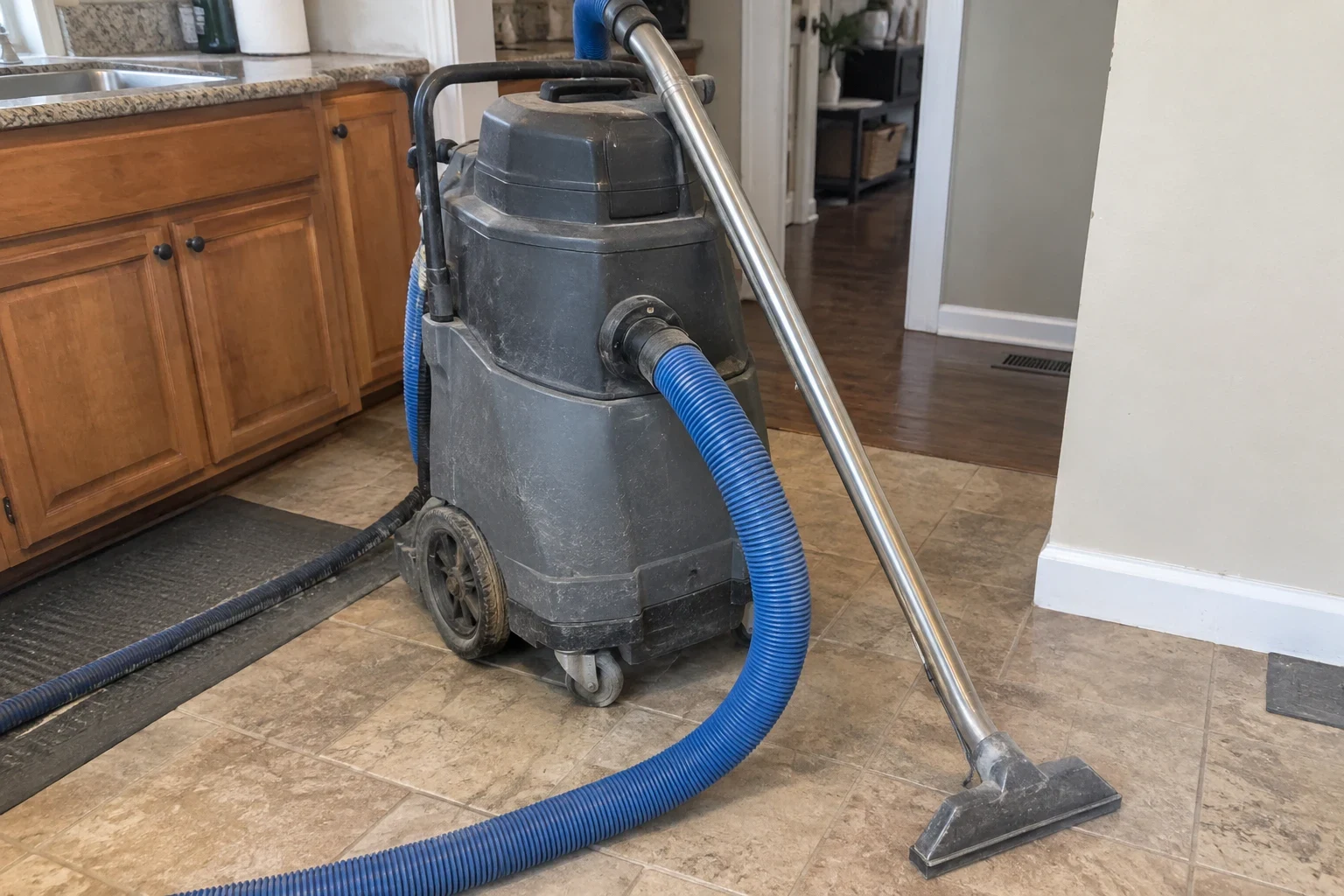
Extraction is the step that takes liquid water out of your home before any drying begins. A wet-vac clears the puddle you can see. It does not reach the gallons held in carpet pad, soaked into the bottom of drywall or sitting in the seams of a plank floor. Our truck-mounted units and weighted extraction tools press down on the carpet as they pull, which draws water up from the pad instead of just skimming the face fibers.
The details here decide how long the rest of the job takes. Every gallon we pull out as liquid is a gallon the dehumidifiers do not have to evaporate. Good extraction often cuts drying time by days and lowers the chance of mold growth or cupped hardwood. Once the water is out, the work moves to drying and dehumidifying.
What Our Extraction Work Includes
- Source check and water category
- Before we start, we confirm the leak is stopped and classify the water. Clean supply-line water is handled differently from a dishwasher overflow or a sewer backup, which goes to our sewage cleanup process.
- Truck-mounted and portable extraction
- Truck-mounted units give us strong, steady suction for large areas and finished basements. Portable extractors reach upper floors and tight rooms where hose runs are impractical.
- Weighted carpet and pad extraction
- A weighted tool compresses the carpet while it pulls, drawing water out of the pad underneath. When pad is too saturated or contaminated to save, we cut it out and leave the carpet that can be dried.
- Hard floor and subfloor work
- On hardwood, laminate and tile we use low-profile squeegee wands and panel systems that pull water from between boards and seams. Water left in the seams is what causes cupping weeks later.
- Moisture mapping
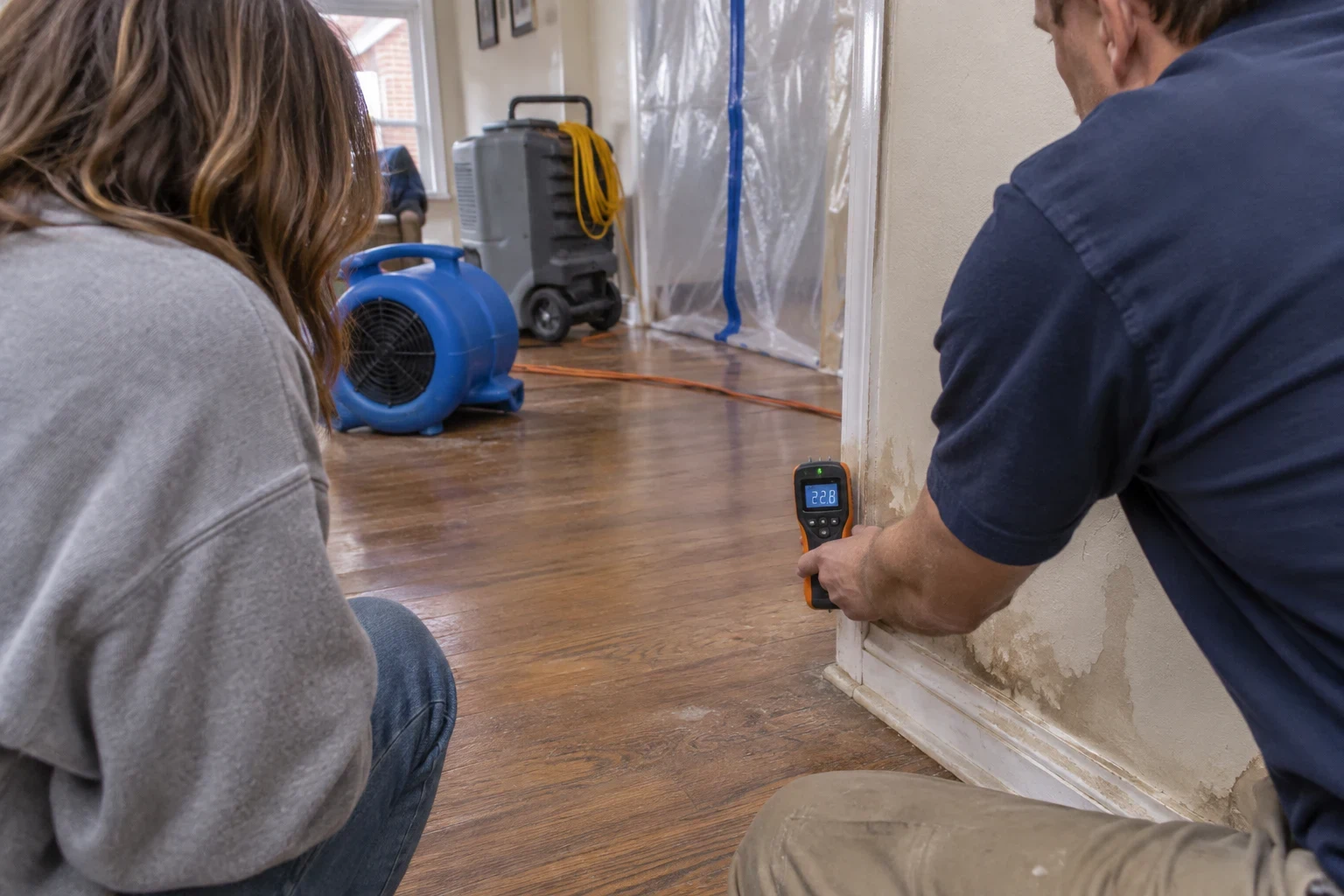
- We check walls, baseboards and floors with pin and pinless meters and a thermal camera. Wet areas are marked on a written map, and you get photos of what we found.
- Furniture and contents protection
- We lift furniture onto blocks or foam pads so stains and rust from legs do not transfer into wet carpet. Items that need to move out of the wet area are moved and noted.
Signs You Need Professional Extraction
Carpet squishes underfoot
If pressing on the carpet brings water to the surface, the pad is saturated. A shop vac will not pull that out.
Water at the base of the walls
Damp baseboards or a dark line along the drywall mean water is wicking upward. Drywall can climb more than a foot above the floor line if it stays wet.
Standing water in the basement
Basements and crawl spaces around Meadowbrook collect water after heavy storms or a failed sump pump. Standing water needs pumping and extraction before drying equipment can do its job.
Hardwood edges starting to lift
Boards that rise at the edges are absorbing water from below. Fast extraction from the seams and subfloor gives the floor its best chance to settle back.
A musty smell after a day or two
That odor often means water is trapped somewhere you cannot see. Our meters find it, and if growth has already started, mold remediation is the next step.
What Moves the Cost of Extraction
Extraction is priced on the amount of water and how hard it is to reach, not a flat room fee. After the free inspection we explain each line on the estimate so you know what you are paying for before we start. If you are filing a claim, we work with most major insurance companies and can share our photos and readings with your adjuster.
Affected area and depth
Square footage matters, and so does how deep the water got. An inch of water across a finished basement takes far more extraction time than a wet hallway.
Water category
Clean water from a supply line can often be extracted and dried in place. Gray or black water requires protective gear, removal of porous materials and disinfection.
Flooring type
Carpet with a reusable pad, glued-down carpet, engineered wood and solid hardwood each need different tools and time. Floating floors sometimes have to be lifted to reach water underneath.
Access and time of day
Upper floors, crawl spaces and long hose runs add labor. After-hours emergency calls can also affect the total.
How an Extraction Visit Runs
- 1
Your call and dispatch
Tell us where the water came from and which rooms are affected. We offer emergency service around the clock and aim to be on site in 60 mins or less.
- 2
Free on-site inspection
We confirm the source is stopped, check electrical safety in wet areas and classify the water. Then we walk you through what we found and what the extraction will involve before work begins.
- 3
Extraction room by room
We start with standing water, then move to carpet, pad and hard floors. Baseboards may come off so we can reach water trapped behind them.
- 4
Readings and the drying plan
After extraction we take a second set of moisture readings and record them. Those numbers set where air movers and dehumidifiers go and give us a baseline to track the floor and walls until they are dry.
Water Extraction Questions
Can I just use a shop vac myself?
A shop vac is fine for a small puddle on tile. It cannot pull water out of carpet pad, wall cavities or the gaps under hardwood. Those hidden areas are where water stays long enough to cause mold and warped floors.
Will my carpet have to be thrown out?
Not always. With clean water and fast extraction, carpet can often be dried and kept, though saturated pad is usually replaced because it is inexpensive and holds moisture. Carpet soaked with sewage or floodwater is removed for health reasons.
How fast do you need to start?
As soon as possible. Within the first day or two, water moves into drywall and subfloor and mold can begin to grow. Starting early usually means less material has to come out.
Do you handle the insurance claim?
We work with most major insurance companies. We document the damage with photos and moisture readings and can explain the process, but your adjuster makes the coverage decisions.
What happens after the water is out?
Extraction removes liquid water, but materials stay damp. We set up drying and dehumidifying equipment and check readings until everything is dry. If drywall or flooring has to come out, our repairs and rebuild team puts it back.
Get the Water Out Before It Spreads
The sooner we extract, the less of your floors and walls has to be replaced. We serve Meadowbrook, Chester, Bon Air and nearby areas.